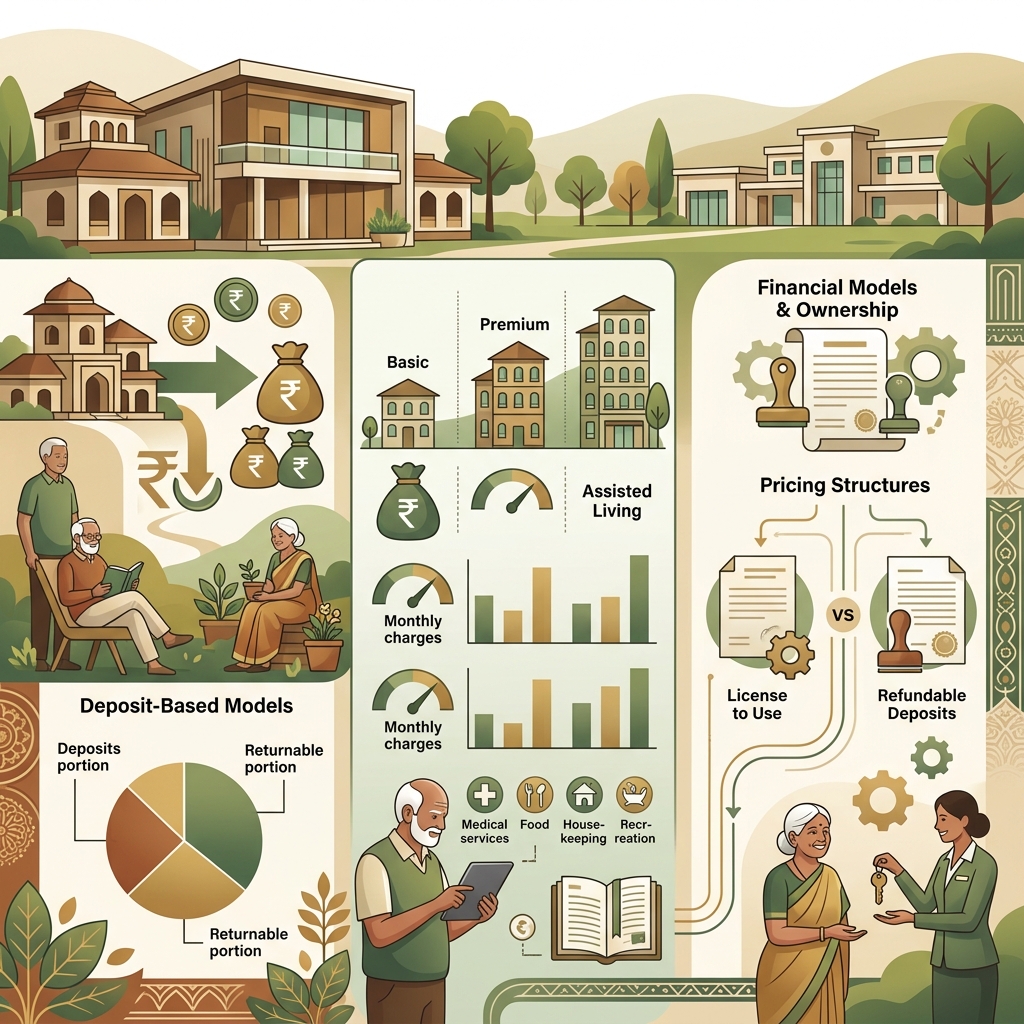
Why Renting Beats Buying: The Smart Senior Living Model
Stop locking up ₹1 Crore in a retirement villa you can never sell. Discover why the 100% liquid rental model is the fastest-growing choice for NRI parents and smart retirees in 2026.

Making the move to a senior living community is one of the most significant financial decisions you'll make in your second innings. Naturally, the first question almost every family faces is: "Is renting a retirement home better than buying?"
For decades, the Indian mindset has equated real estate ownership with security. But as the premium senior living market rapidly evolves, families are reconsidering what "security" actually means at the age of 65.
Is security owning the walls around you? Or is security having your life savings safely earning interest while you enjoy the freedom to move, travel, and upgrade care levels without friction?
In this guide, we provide a brutally honest breakdown of both options—no sales pitches, just the reality of the Indian market in 2026.
1. How Both Models Actually Work
Before comparing them, it’s important to understand what you’re actually paying for. For a broader perspective on pricing tiers across major cities, read our guide to retirement home costs across India.
The Ownership Model (Buying)
In this model, you purchase a villa or apartment within a senior living community outright. It is a traditional real estate transaction. You own the asset, it registers in your name, and you can pass it down to your heirs.
- The Costs: A large upfront capital investment (₹80 Lakhs to ₹3 Crores depending on the city), plus monthly maintenance fees, food, and care charges (usually ₹20,000 – ₹40,000/month).
The Rental Model (Leasing)
Instead of buying real estate, you pay a monthly fee that covers your accommodation, meals, maintenance, and healthcare access.
- The Costs: Zero upfront capital lock-in (only a standard refundable security deposit), and an all-inclusive monthly fee tailored to the selected room tier and care requirements.
2. Pros & Cons: Brutally Honest Comparison
Let’s look at the quiet advantages and the hidden downsides of both approaches.
Owning a Retirement Home
Pros:
- Psychological Comfort: The deep-rooted Indian comfort of owning the roof over your head.
- Hedge Against Rent Inflation: While monthly care fees will rise, your base accommodation cost is fixed.
Cons:
- Capital Trap: You are locking ₹1 Crore+ into an asset that doesn't generate income for your daily living expenses.
- Double Maintenance: You pay property taxes and community maintenance fees indefinitely.
- The "Locked In" Factor: If you dislike the food, the management changes, or you simply want to move closer to family, moving means selling the house first.
Renting a Retirement Home
Pros:
- 100% Capital Liquidity: Your ₹1 Crore stays in your portfolio, generating high-yield returns that can often cover the monthly rent entirely.
- Total Flexibility: If your health needs change or you want to spend summers with your children in the US, you can leave without being stuck with an empty property.
- Maintenance-Free: You are subscribing to a hospitality service. If the plumbing breaks, it’s entirely the management's problem.
Cons:
- Problems with rental retirement homes: The primary risk is inflation. Your monthly rent will increase over time (usually 5-8% annually). You must ensure your investment yields keep pace with these increases.
- No Asset to Pass Down: You are entirely consuming your monthly budget on lifestyle rather than building real estate equity for your heirs.
3. The Reality Check: What the Brochures Don't Tell You
When you sit in a sales office, the numbers look straightforward. But here is what happens five, ten, or fifteen years down the line.
Can you sell a retirement home easily in India? In a word: No. Real estate in the senior segment is highly illiquid. When you or your heirs eventually need to sell the property, you are selling to a hyper-niche market. The buyer must be over 55, willing to move to that specific community, and have the capital ready. Properties can sit on the market for years or sell far below market value.
The Reality of Changing Health Suppose you move in independently, but ten years later require intensive assisted care that the current community cannot provide. If you rented, you give 30 days notice and move to a medical-care facility. If you bought, you are physically tethered to a house that no longer serves your needs until you can liquidate it.
4. When Does Rental Make More Sense?
We don’t believe there is a "one-size-fits-all" answer. The right choice depends entirely on your family dynamics and financial setup.
You should BUY if:
- You have immense liquid wealth and locking up ₹2 Crores will not impact your daily lifestyle.
- You are absolutely certain you will never want to relocate.
- You genuinely want to pass that specific property down to a 55+ relative.
You should RENT if:
- You have NRI children: If your children live abroad, rental allows you the flexibility to spend months with them without worrying about a vacant property back in India.
- You value financial mathematics over real estate: If you understand that 8% returns on a ₹1.5 Cr mutual fund portfolio yields ₹1 Lakh a month—effectively making your luxury senior living "free"—the rental math is undeniable.
- You want a trial period: Renting allows you to test the community, the weather, and the lifestyle. If it's not a fit, you pack your bags and leave.
Still Unsure What Fits Your Situation?
Deciding between renting and buying is complex. At Aran Senior Living, we operate exclusively on the rental model because we believe your money should work for you, while you enjoy the life you deserve. Explore our boutique rental retirement community in Coimbatore to see how independent, active senior living works in practice.
Talk to our team to understand if rental suits your specific financial situation. We’ll tell you honestly if it’s not the right fit.
Inquire now to speak with our advisors today.