Joint Family vs. Retirement Home in India (2026 Guide)
Choosing between a joint family and a retirement home in India? Compare daily companionship, care support, privacy, independence, and hidden costs.
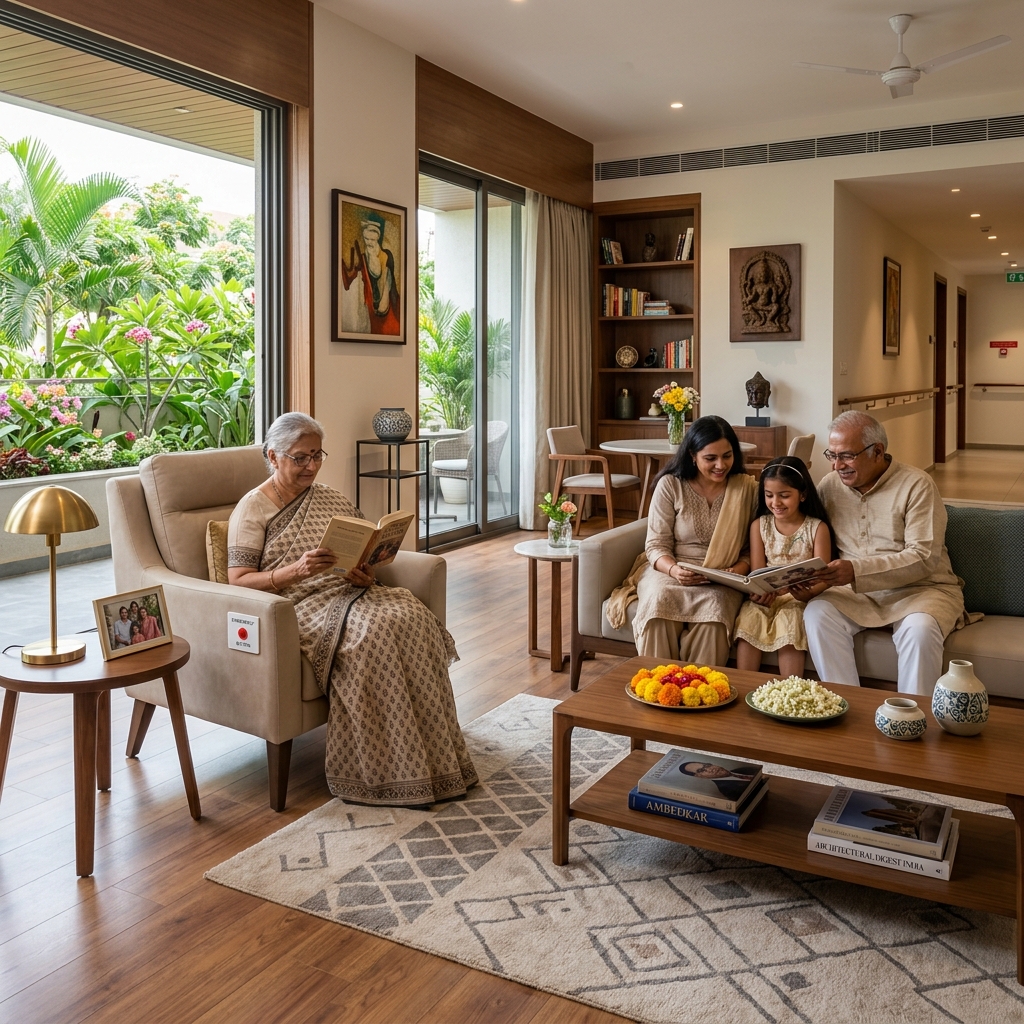
In India, a joint family usually offers inherent emotional support and built-in companionship, while a retirement home offers structured professional care, peer community, and senior-focused safety. The better choice depends entirely on the elder’s health, family availability during the day, and their desire for independence.
The decision between maintaining a traditional joint family setup and moving to a modern retirement community is one of the most emotionally charged choices an Indian family can make. It is a decision caught between cultural duty and practical modern realities.
1. The Realities of the Modern Joint Family in India
The Indian joint family has historically been the ultimate social security net. In theory, it provides multi-generational bonding, shared responsibilities, and constant companionship. However, the modern reality often looks different.
Consider a typical family in a bustling city: both adult children are working demanding corporate jobs, and the grandchildren are at school until late afternoon. While the family lives under one roof, the elderly parents often spend 8 to 10 hours a day in isolation. They may manage a domestic helper or a cook, but genuine peer companionship is limited.
This isolation—despite living in a "joint family"—is what drives many proactive seniors toward premium retirement homes. They aren't looking to abandon their families; they are looking to reclaim their active daytime hours among peers.
2. Joint Family vs. Retirement Home: A Direct Comparison
When evaluating both models, it helps to look past the emotion and break down the daily logistics.
| Aspect | Joint Family Living | Modern Retirement Home |
|---|---|---|
| Daily Companionship | High during evenings/weekends, but often isolated during standard working hours. | High, with constant access to peers, social clubs, and structured activities. |
| Care Support | Informal, managed by family members who may lack medical training or time. | Formal, staff-managed with 24/7 emergency response and vital monitoring. |
| Privacy & Space | Lower; schedules and spaces must accommodate the entire multi-generational family. | Higher; seniors have their own private residences and control their daily schedule. |
| Independence | Can be limited by family routines or mobility issues within a traditional home. | Maximized through accessible architecture and transport services. |
| Cost Structure | Shared household costs, though hiring private home nurses adds significant expense. | Predictable monthly fee covering housing, dining, security, and amenities. |
3. The Hidden Costs of "Aging in Place"
Many families assume that keeping parents at home is the most financially sound decision. However, as care needs increase, the costs of "aging in place" can rapidly escalate.
According to 2026 market estimates from home healthcare agencies in India, hiring a qualified, 24-hour live-in nurse typically costs between ₹25,000 and ₹45,000 per month—and this is just for the caregiver's salary. When you factor in the cost of groceries, a cook, home maintenance, electricity, and modifying bathrooms for safety, the monthly expenditure often exceeds the cost of a premium senior living community.
4. Decision Guide: How to Choose for Your Family
If you are struggling to make this decision, use this simple framework:
Choose the Joint Family if:
- The family has a member available at home during the day.
- The physical house is senior-friendly (no steep stairs, grab bars installed).
- The elderly parents have an active local social circle they can access without driving.
Choose a Retirement Community if:
- Adult children work long hours or live abroad (see our guide on retirement care for NRI parents in India).
- The primary concern is emergency medical response and daily physical safety.
- The parents are feeling lonely, bored, or burdened by managing domestic staff.
5. Pros and Cons: The Brutally Honest Truth
We believe in transparency. Neither model is perfect, and it is important to acknowledge the downsides of both.
The Joint Family:
- Pros: Deep emotional bonds with grandchildren, financial efficiency in a shared household, and the comfort of a familiar neighborhood.
- Cons: Generational clashes over lifestyle or parenting, lack of specialized medical infrastructure, and a heavy caregiving burden on the adult children.
The Retirement Home:
- Pros: Zero home maintenance, instant peer community, tailored nutrition, and immediate emergency response.
- Cons: Requires a cultural adjustment, involves a recurring financial commitment, and lacks the historical familiarity of the family home.
If you are an NRI child wrestling with the cultural implications of this choice, we highly recommend reading our guide: Is It Wrong to Move Parents to a Retirement Home in India?
6. How Aran Senior Living Bridges the Gap
At Aran Senior Living, we designed our community to eliminate the hardest compromises of this decision. We are not a hospital, and we are not an institution.
Located in the serene foothills near the Isha Yoga Center in Coimbatore, our boutique resort features only 18 private residences. We offer wholesome home-style dining and a 24/7 command center with emergency response teams. Should advanced medical care be required, major facilities like Ganga Hospital are easily accessible.
Most importantly, our rental-only model with zero real estate purchase or capital lock-in means families can try the community without selling their family home (standard refundable security deposit applies). You can experience the peer companionship and professional security of a retirement resort, while keeping the joint family home intact for weekends and holidays.
Talk to our team to understand if this model suits your family's situation—we'll tell you honestly if it's not the right fit.
Editorial Note
This article’s financial estimates regarding home nursing and care costs in India are drawn from 2026 market data published by home healthcare networks including Aayan Global and Samarth Community. The comparisons between living models are based on the Aran Research Team's direct operational experience and conversations with intergenerational families navigating senior care.